Columbia SC Housing Market 2027: What the Headlines Are Missing
The Columbia, South Carolina, housing market could look very different in 2027, and some neighborhoods may offer buyers better opportunities than others. While home prices are rising in certain areas, others are seeing prices fall as inventory grows and new construction communities compete for buyers. With mortgage rates still affecting affordability, knowing where to buy could make a significant difference in what you get for your money.
Whether you're planning to relocate to South Carolina, buy your next home, or sell your current property, the headlines don't tell the whole story. From Irmo and Northeast Columbia to Lexington, Blythewood, Chapin, and the communities surrounding Lake Murray, each area has its own pricing trends and market conditions.
Let's break down the local housing data, compare home prices, and explore what could lie ahead in 2027 so you can make a more informed decision about your next move.
Table of Contents
- Mortgage Rates and the Affordability Disconnect
- Why South Carolina Keeps Drawing Buyer
- Irmo: Below-National Pricing in the Columbia Metro
- Northeast Columbia: Steady Pricing Around $300,000
- Blythewood: Mid-$300,000s and Growing
- Lexington 29072: Established Neighborhoods Off the Lake
- Lexington 29073: New Construction Competition and Pricing Pressure
- Chapin: Lake Access and Relocation Research Target
- Lake Murray: Lakefront Pricing by Location
- Newberry and Saluda Counties: More Affordable Lakefront Further West
- Bluefield Neighborhood: White Knoll High School Zoning Drives Demand
- Which Area Is Right for You: Comparing Lifestyle Trade-Offs
- Conclusion: Making the Move That Fits Your Goals
Mortgage Rates and the Affordability Disconnect
Probably the biggest issue in housing right now is affordability and interest rates, right? Look, people love debating whether current mortgage rates are historically high or historically normal, and agents will post charts showing you that people bought homes at 10%, 12%, even 15% interest rates decades ago. Statistically, sure, that's true. But let's be real, that does absolutely nothing for the person staring at a payment today. A buyer doesn't look at a 7% mortgage rate and suddenly feel better because somebody bought a house at 14% in 1982.
To me, that's no different than pulling into a gas station at $4 a gallon and having the attendant walk outside and say, you do realize cars get much better gas mileage today, right? So relatively how much fuel you're using, these prices are great. Yeah, I'm still paying $4 a gallon. And look, I think agents sometimes miss that because they get stuck in their own echo chambers looking at the market through the industry lens. But the buyers, you're asking a much simpler question: what does this house actually cost me every month?
Honestly, this is why the disconnect between buyers and sellers has become so massive today. Let's make this really simple. The national median existing home price right now is roughly $417,000. At around a 3% mortgage rate compared to a 7% with the same down payment and roughly the same monthly payment, you're looking at a difference of about $160,000 in the home price. Same buyer, same income, same monthly payment, way less house. That's the disconnect buyers are feeling, and you might be feeling too. The buyer didn't suddenly make less money. The house didn't suddenly become $160,000 better. The cost of borrowing the money changed.
Now flip that around and look at it from the seller side. Let's say you bought your house a few years ago for $350,000 and locked in a 3% mortgage rate or refinanced like we did and so many other people. Then life changes. Maybe the kids move out, you don't need as much space anymore. So you start thinking maybe it's time to downsize. Sounds simple enough, right? Sell the bigger house, buy something smaller, lower the payment, and hey, move on with life.
Except now you start looking, and because rates are closer to 7%, you may have to buy a house more than $100,000 cheaper just to get anywhere close to the payment you already have. So now you're looking at this smaller house thinking, wait a second, I'm giving up space, moving everything I own, and I'm barely saving any money. At that point, a lot of people right now are just saying, you know what, I'll just stay put. And that one story explains a huge part of what we're seeing right now. Buyers don't love the payment, sellers don't want to give up the payment they already have.
Statistically, as the amount of first-time homebuyer pool drops, that means a lot of the people are both the buyer and the seller at the exact same time. So I don't think today's market can simply be explained by saying there aren't enough buyers out there or there aren't enough houses. The reality is there are just not enough people willing to move.
Why South Carolina Keeps Drawing Buyer
Now that you understand the bigger struggle facing the housing market, here's the other side of it, because despite the narrative, people are still moving. In September, sales rose 1.5% month over month nationally. And later in this video, I'm going to show you what those buyers are actually thinking and how they're approaching this market. That may help you figure out whether making a move right now actually makes sense for you.
But first, South Carolina continues to be one of the top states in the country people are moving to. South Carolina was the nation's fastest growing state from July of 2024 to July of 2025, increasing its population by 1.5%, according to the census. And according to United Van Lines, South Carolina ranked 3rd in the country for inbound moves last year, with roughly 61% of their moves involving the state coming in.
Look, all of that matters because while buyers everywhere are dealing with higher interest rates and affordability challenges, not every market starts from that same price point. That's where Columbia becomes really interesting. The national median home price is around $410,000. But here locally, the median across the broader Columbia area is just over $281,000, which is up 1.1% from last year.
Now, look, I get it. Obviously, that covers a lot of ground. But when you start breaking down by area and looking specifically at single-family homes, you can see how different this market really is. Even in some of those most sought-after parts of the Columbia area off the lake, the median home price is still below the national median. And that gives buyers here a very different starting point when we talk about affordability. And that difference matters.
Irmo: Below-National Pricing in the Columbia Metro
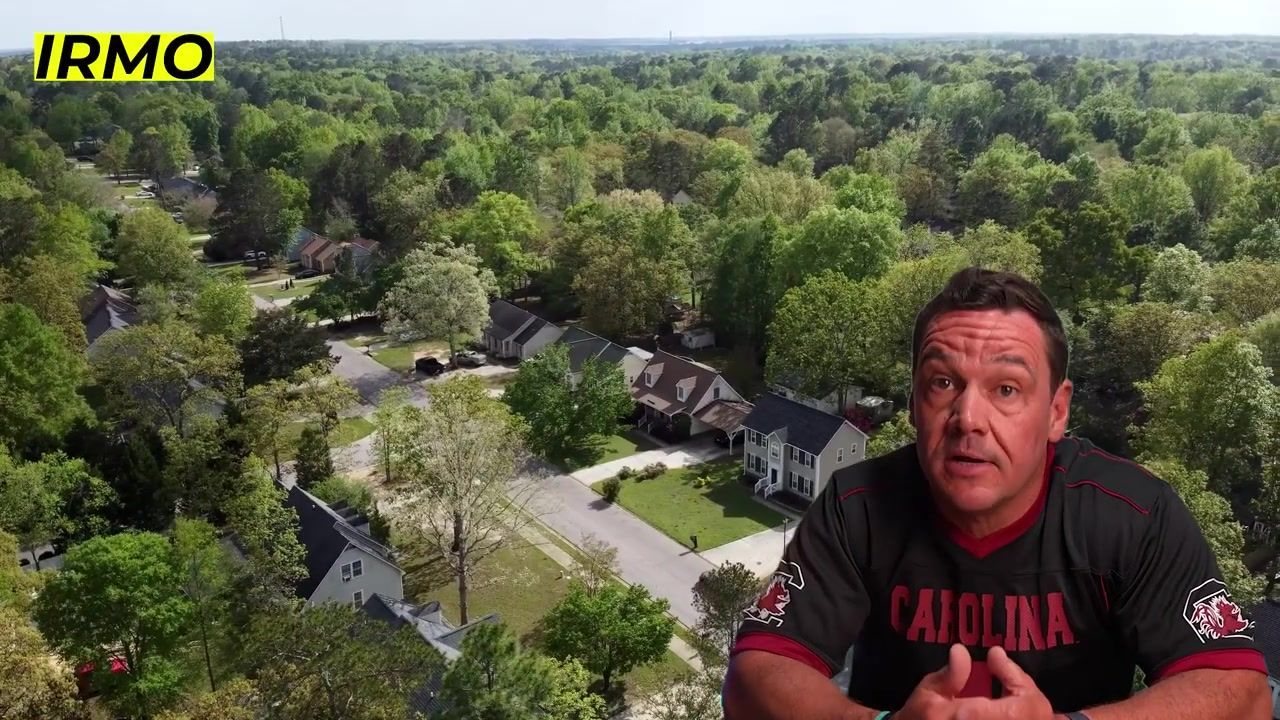
Irmo right now is sitting around $293,000 for the median home price. That's part of the broader Columbia metro, and it's one of those areas where buyers relocating from higher-cost markets immediately notice the difference. You're still getting access to the amenities, the shopping, the hospitals, and the commute options that come with living in a metro area, but you're doing it at a price point that's significantly below the national median.
Now, once you start looking at lakefront homes on the Irmo side, those numbers do change. Lakefront properties over on the Irmo and Chapin side of Lake Murray are running closer to $1.07 million. So there's a massive range depending on what type of lifestyle you're buying into. But for buyers looking at traditional suburban neighborhoods in Irmo, that sub-$300,000 median gives you a lot more room to work with than you'd find in many other growing metros across the country.
The reality is Irmo sits in a spot where you're close enough to downtown Columbia for work, you've got Lake Murray access nearby, and you're still in a price range that makes sense for a lot of buyers who are trying to balance affordability with location. That's why it continues to be one of those areas buyers research heavily when they're considering moving to Columbia, South Carolina.
Northeast Columbia: Steady Pricing Around $300,000
Northeast Columbia is running right around $300,000 for the median home price. It's another one of those areas where buyers are finding that balance between affordability and access. You're still in the Columbia metro, you've got reasonable commute times, and you're in a price range that's competitive with what we're seeing in other parts of the area.
What makes Northeast Columbia interesting is that it's held relatively steady. You're not seeing the same kind of wild swings you might see in neighborhoods where new construction is flooding the market or where inventory is extremely tight. It's just a steady, relatively normal housing market where homes are taking slightly longer to sell than they did a few years ago, but buyers still have leverage and sellers are still getting reasonable prices.
For buyers relocating to the area, Northeast Columbia often comes up as one of those options where you're weighing commute, schools, and access to shopping and amenities. It's not necessarily the headline name that people research first, but it's one of those areas that makes a lot of sense once buyers start comparing what their money actually gets them in different parts of the metro.
Blythewood: Mid-$300,000s and Growing
Blythewood is sitting closer to $365,000 for the median home price. It's one of those areas that's continued to grow over the last several years, and it's become a popular target for buyers who want a little more space, newer construction options, and a suburban feel while still being within reasonable commuting distance of Columbia.
What you're seeing in Blythewood is a mix of established neighborhoods and newer developments. There's been a lot of new construction activity in the area, and that's part of what's driven the growth. Buyers are drawn to the newer homes, the neighborhood amenities, and the sense that they're getting more house and more land for their money compared to some of the closer-in suburbs.
The trade-off, of course, is the commute. If you're working in downtown Columbia or even in some of the closer suburbs, Blythewood adds time to your drive. But for buyers who are okay with that trade-off, or for buyers who are working remotely and don't have to make that commute every day, Blythewood offers a lot of value. It's one of those areas where the price point makes sense, the inventory is relatively healthy, and buyers have options.
Lexington 29072: Established Neighborhoods Off the Lake
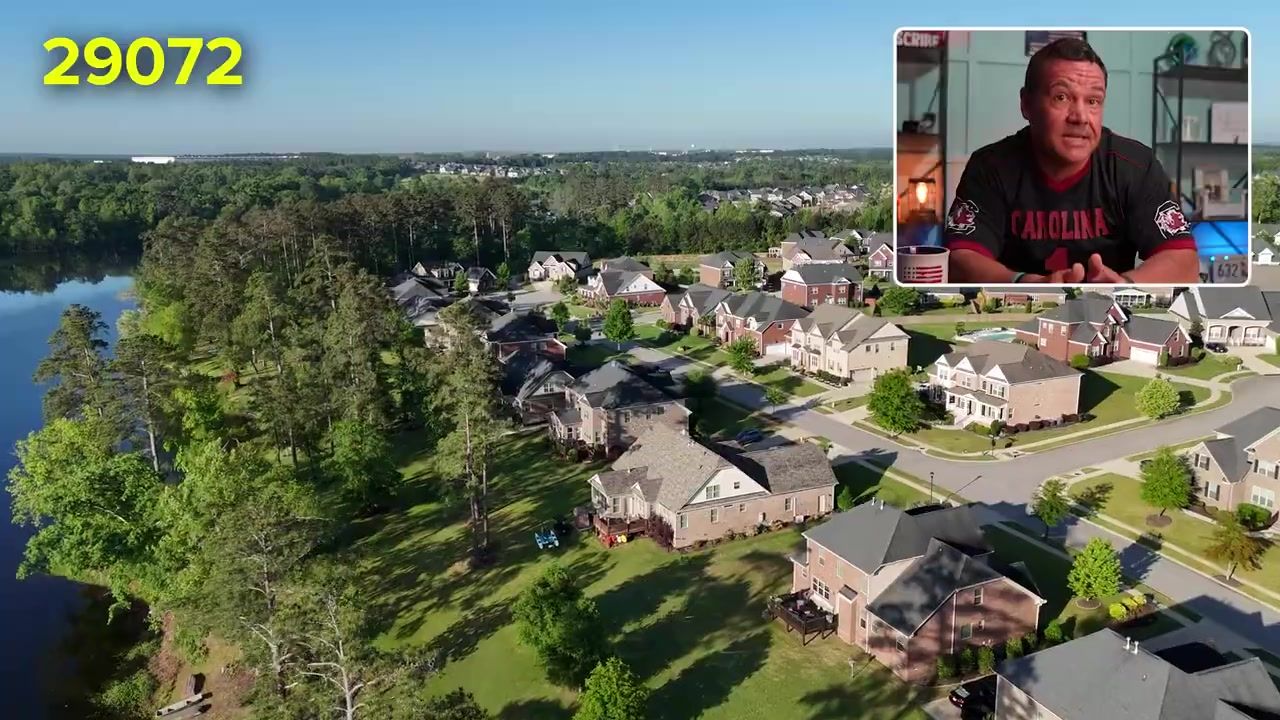
Lexington 29072 is the side of Lexington that's off the lake, and it's running right around $400,000 for the median home price. That's up from about $361,000 to $375,000 year over year. What's interesting here is that sales actually slipped a little from 950 homes last year to 915 homes this year, but the median price still went up.
So one side of Lexington sold fewer homes and prices went up. That tells me something about the supply and demand dynamic in this particular zip code. There's less room for large-scale new construction in 29072 because a lot of the area is already built out. You've got more established neighborhoods, you're closer to downtown Lexington, and you're closer to Lake Murray. Those are all things buyers value, and when supply is limited, prices hold.
Right now roughly 19% of the active inventory in 29072 is new construction. That's a meaningful number, but it's not overwhelming the market the way it is in some other areas. So buyers in 29072 are competing for a mix of resale homes and some new construction, but they're not dealing with the same level of builder competition and incentives that are putting pressure on pricing in other parts of Lexington.
Lakefront homes on the Lexington side of Lake Murray are running around $1.725 million, so there's a huge range depending on whether you're looking at a traditional suburban neighborhood or you're looking for that lakefront lifestyle. But for buyers who want to be in Lexington, who want to be closer to the lake, and who want more established neighborhoods, 29072 is where a lot of that inventory sits.
Lexington 29073: New Construction Competition and Pricing Pressure
Now look at the 29073 side of Lexington in the same time frame. Sales actually increased from 611 homes to 632, but the median price fell from about $280,000 to $267,000. So one side sold fewer homes and prices went up. The other side sold more homes and prices went down. That's exactly why I keep saying there isn't one Columbia market or even one Lexington housing market.
I think part of what's driving the difference is supply. Right now roughly 30% of the active inventory in 29073 is new construction, but over on the 29072 side it's closer to 19%. That may not sound like a huge difference at first, but it matters because in 29073 buyers have more brand new options competing for those same buyers. And look, the reality is when builders are offering closing cost help, rate buydowns, and other incentives, that puts pressure on pricing. Not just for new homes but for nearby resales too.
Meanwhile, over in 29072, there's just simply less room for those large-scale new construction neighborhoods, but you get those benefits of being closer to downtown Lexington, closer to Lake Murray, and having more established neighborhoods. So look, even with fewer sales, there isn't the same level of new supply pushing against prices.
Now that doesn't mean 29072 can't soften, and it doesn't mean 29073 is in trouble. It just means these two zip codes can react very differently even though they're right next to each other. And this is one of those examples where the town name doesn't tell you the whole story. You have to understand what's happening at the zip code level, and sometimes even at the neighborhood level, to really understand what buyers are dealing with.
Chapin: Lake Access and Relocation Research Target
Chapin is one of those names that comes up constantly when buyers are researching the Columbia area. It's become a popular target for relocation buyers, and a lot of that has to do with the Lake Murray connection. Chapin sits on the lake, and for buyers who are prioritizing lake access, it's one of the first places they start looking.
Lakefront homes on the Irmo and Chapin side of Lake Murray are running around $1.07 million. That's significantly more affordable than the Lexington side of the lake, where lakefront homes are closer to $1.725 million. So for buyers who want that lakefront lifestyle but who are trying to stay within a certain budget, Chapin becomes a really attractive option.
Now, not every home in Chapin is lakefront, obviously. There are plenty of traditional suburban neighborhoods in the area that sit off the lake. But the proximity to Lake Murray, the small-town feel, and the sense that you're getting a little more space and a little more lifestyle for your money are all things that draw buyers to Chapin. It's one of those areas where the name carries weight, and buyers who are relocating from other states often put it at the top of their list before they've even visited.
The trade-off, of course, is the commute. If you're working in Columbia, Chapin adds time to your drive. But for buyers who are okay with that, or for buyers who are retired or working remotely, Chapin offers a lifestyle that's hard to replicate in some of the closer-in suburbs.
Lake Murray: Lakefront Pricing by Location
Lake Murray is one of the biggest draws for buyers relocating to the Columbia area, and the pricing varies dramatically depending on where you are around the lake. Lakefront homes on the Lexington side are running around $1.725 million. Over on the Irmo and Chapin side, you're closer to $1.07 million. And then further west in the more rural Newberry and Saluda counties, you're looking at around $727,000.
So even inside one lake, you can go from the high $700,000s to well over $1.7 million depending on where you are and what type of access and amenities you're getting. That's a massive range, and it's one of those things that surprises buyers who assume lake pricing is consistent all the way around.
What I've seen with lakefront buyers is that they have very specific criteria. It's not just about being on the lake. It's about the acreage, the view, the amount of updating the house needs, the square footage, and whether there's a private dock in the backyard. Those details matter a lot more at the lakefront price point than they do in a traditional suburban neighborhood.
Some of our buyers in these price points have found houses almost immediately, where others have had to wait months for the right property to hit the market. And that's the reality of lakefront inventory. There's not a ton of it, and when something good comes on the market, it moves quickly. But when something sits, it's usually because it's missing one or two of those key criteria that lakefront buyers are looking for.
Newberry and Saluda Counties: More Affordable Lakefront Further West
Newberry and Saluda counties sit further west of Columbia, and they're more rural than the closer-in suburbs. Lakefront homes in these counties are running around $727,000, which is significantly more affordable than the Lexington side of the lake or even the Irmo and Chapin side.
The trade-off is location. You're further from the metro, you're further from shopping and amenities, and the commute to Columbia is longer. But for buyers who are prioritizing lake access and who are okay with a more rural setting, Newberry and Saluda counties offer a lot of value. You're getting lakefront living at a price point that's almost half of what you'd pay on the Lexington side.
This is one of those areas where buyers have to be really clear about what they're prioritizing. If you're working in Columbia and you're making that commute every day, Newberry and Saluda counties may not make sense. But if you're retired, if you're working remotely, or if you're just prioritizing lifestyle over convenience, these counties give you a lot more house and a lot more land for your money.
Bluefield Neighborhood: White Knoll High School Zoning Drives Demand
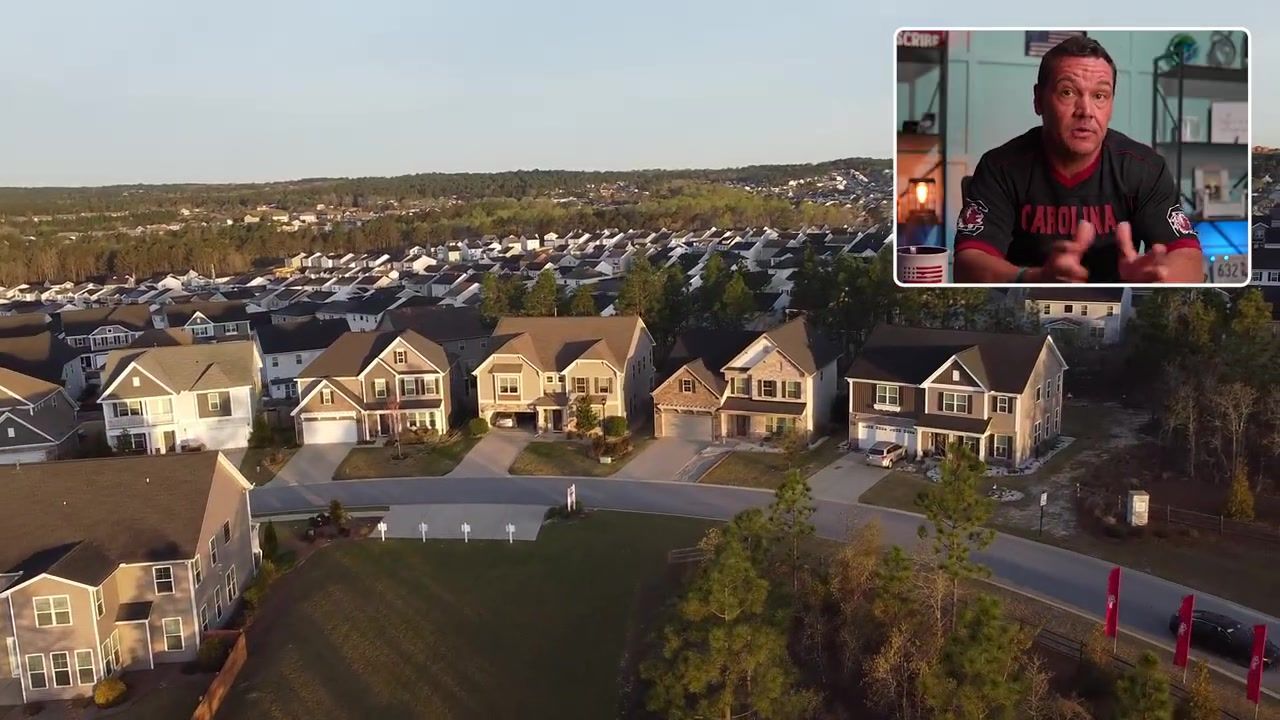
The Bluefield neighborhood sits in the Lexington 29073 zip code, and it's zoned for White Knoll High School. This is actually the top new construction neighborhood our team has sold in. Last year, according to the MLS, they closed 60 homes. Those homes averaged about 2,267 square feet and sold for roughly $140 per square foot. This year, they've already closed 79 homes, but the average size of those homes dropped to about 1,887 square feet. And this year, the average price per square foot actually increased to about $151.
So look, if you only looked at the average sales price or median sales price, you might say, well, I mean, prices are dropping. But that wouldn't really tell the whole story. They're actually just selling more smaller homes, and those smaller homes are actually selling for more per square foot. That's why I keep saying you have to be careful with broad market numbers. Sometimes the price goes down because the market has softened. I'm not going to disagree with that. Sometimes it goes down because the product mix changed.
Bluefield has a neighborhood pool, and it's become one of those neighborhoods where buyers know exactly what they're getting. It's new construction, it's in the White Knoll High School zone, and it's in a price range that makes sense for a lot of buyers. This year alone, Bluefield and the Longview neighborhood made up 20% of the closings in that area. That tells me something about demand.
But here's the catch: by the end of this year, both those neighborhoods are more than likely going to be sold out. And moving forward, the large-scale neighborhoods actually push into different school zoning areas and even different districts. So supply in that area alone is about to dramatically change. The question that remains is, are buyers specifically targeting that White Knoll High School zoned area, or are they willing to push further out to stick in those new construction opportunities. And that dynamic isn't just playing out right here in the White Knoll High School zoned area. This dynamic plays out across the entire metro as new construction developers try and decide where demand is going next.
Which Area Is Right for You: Comparing Lifestyle Trade-Offs
So you've seen the numbers, you've seen the range, and you've seen how different parts of the Columbia metro can behave completely differently even when they're sitting right next to each other. But the bigger question is, what does all of this mean for you? Because at the end of the day, the median price and the days on market don't tell you whether a move makes sense. What tells you that is whether the trade-offs match what you're actually trying to accomplish.
Some buyers are compromising on the house to get the location they want. Others are compromising on location to get the house they want. Some are moving further out because they realize their money goes further. Some want the older established neighborhood because they value the trees, the location, and the lot spacing. Others would rather have that brand new construction house, the neighborhood pool, and less immediate maintenance to worry about.
This is where I think relocation buyers especially need to be careful. Because look, it's really easy to sit at home researching Columbia and convince yourself, hey, I want Lexington, I want Chapin, I want Blythewood. Then you actually get here and realize the town name isn't really what you cared about. What you cared about was, look, I want the newer house, or I want more land. I don't want to drive 35 minutes every time I need something. I want that Lake Murray access. I want to be closer to a walkable downtown. I want to be near Costco. I need this commute to make sense to keep myself sane.
Those things start driving the decision a lot more than the headline market statistics. The price reduction or the days on market of the listing that you have saved. Because at that point, you're no longer comparing photos online, you're comparing real-life trade-offs.
Choose Lexington 29072 if you want to be closer to downtown Lexington, closer to Lake Murray, and in more established neighborhoods. You'll pay more, but you're getting location and limited new construction competition.
Choose Lexington 29073 if you want more brand new options, builder incentives, and a lower price point. You'll have more competition from new construction, but you'll also have more leverage to negotiate.
Choose Chapin or Lake Murray if lake access is the priority and you're okay with a longer commute. The lifestyle trade-off is real, but so is the premium you'll pay for lakefront.
Choose Newberry or Saluda counties if you want lakefront living at a more affordable price point and you're okay with a more rural setting and a longer drive to the metro.
Choose Blythewood if you want newer construction, more space, and a suburban feel, and you're okay with the commute to Columbia.
Choose Irmo or Northeast Columbia if you want to stay closer to the metro, keep your price point below $300,000, and still have access to amenities and commute options.
The reality is there isn't one right answer. There's only the answer that makes sense for your life, your goals, and your budget.
Conclusion: Making the Move That Fits Your Goals
The Columbia, South Carolina, housing market is changing, and 2027 could bring new opportunities for both buyers and sellers. With inventory growing, mortgage rates influencing affordability, and builders offering incentives, the market may continue to shift. However, not every neighborhood will experience the same trends. Some homes will remain competitive, while others may offer buyers more negotiating power and better value.
For buyers, the coming months could present opportunities to negotiate on resale homes or take advantage of new construction incentives. Sellers, meanwhile, may need to pay closer attention to pricing, property condition, and competition to attract serious buyers. Ultimately, understanding what's happening in your specific area matters far more than relying on national housing headlines.
If you're thinking about relocating to Columbia, South Carolina, or moving to a different home within the area, consider what matters most to you. Whether you're looking for an established neighborhood in Lexington, newer construction in Blythewood, affordable options in Irmo, or a lakefront property near Lake Murray, the best choice depends on your budget, lifestyle, and long-term goals.
You don't have to predict exactly where the market is headed to make a confident decision. You just need to understand your options and how they align with your plans. If you're ready to explore your next move, call or text me at 803-999-4663 to discuss the communities, home prices, and opportunities that make the most sense for you.
FAQ: Columbia SC Housing Market 2027
Are home prices in Columbia SC going up or down in 2027?
Home prices across the broader Columbia area are up about 1.1% year over year, but that number doesn't tell the whole story. Some areas like Lexington 29072 saw prices increase from around $361,000 to $375,000, while Lexington 29073 saw prices drop from $280,000 to $267,000. The direction depends heavily on the zip code, the amount of new construction competing for buyers, and the condition of the homes on the market.
Should I buy a home in Columbia SC now or wait until 2027?
That depends on your personal goals, not the headlines. Right now buyers have more negotiating power than they did a few years ago, and builders are offering aggressive incentives like rate buydowns and closing cost assistance. If mortgage rates drop into the low 6s or high 5s in early 2027, demand could pick up and some of those incentives may become less aggressive. The question isn't whether the market is perfect, it's whether making a move gets you closer to your goals.
Why are home prices different in Lexington 29072 vs 29073?
Lexington 29072 has more established neighborhoods, less room for large-scale new construction, and is closer to downtown Lexington and Lake Murray. About 19% of the active inventory is new construction. Lexington 29073 has more brand new options, with about 30% of active inventory being new construction. When builders offer closing cost help and rate buydowns, that puts pressure on pricing for both new homes and nearby resales. So one side sold fewer homes with prices up, and the other sold more homes with prices down.
What is the median home price in Columbia SC right now?
The median across the broader Columbia area is just over $281,000, which is significantly below the national median of around $410,000. But that number covers a lot of ground. Irmo is around $293,000, Northeast Columbia is around $300,000, Blythewood is closer to $365,000, and Lexington ranges from $280,000 in the 29073 zip code to $400,000 in the 29072 zip code. Lakefront homes on Lake Murray range from $727,000 in the more rural Newberry and Saluda counties to $1.725 million on the Lexington side.
Is new construction a better deal than resale homes in Columbia SC?
Right now builders are offering aggressive incentives like rate buydowns, closing cost assistance, and move-in packages that the average lender can't match. For buyers in the $300,000 to $500,000 range, that's making new construction very competitive with resale homes. A resale house may need updates, new carpet, or roof and HVAC repairs, while a brand new house down the road offers no immediate maintenance and a lower effective interest rate. That's why we're seeing more buyers choose new construction, and it's putting pressure on resale pricing in areas with a lot of new supply.
What areas around Columbia SC are best for relocating buyers?
That depends on what you're prioritizing. If you want lake access, Chapin and Lake Murray are popular targets, but you'll pay a premium and the commute to Columbia is longer. If you want newer construction and more space, Blythewood and Lexington 29073 offer a lot of options. If you want to be closer to the metro and keep your price point below $300,000, Irmo and Northeast Columbia make sense. If you want established neighborhoods closer to Lake Murray, Lexington 29072 is where a lot of that inventory sits. The town name matters less than the trade-offs you're willing to make on commute, price, and lifestyle.
Brandon Garon
We provide honest and transparent insights into relocating to the Midlands of South Carolina. Brandon's mission is to help you confidently decide if South Carolina is right for you—without hidden fees or sales pitches.
Call / Text: 803-999-4663



Recent Posts