Living on Lake Murray, SC: Home Prices, Traffic & Neighborhoods
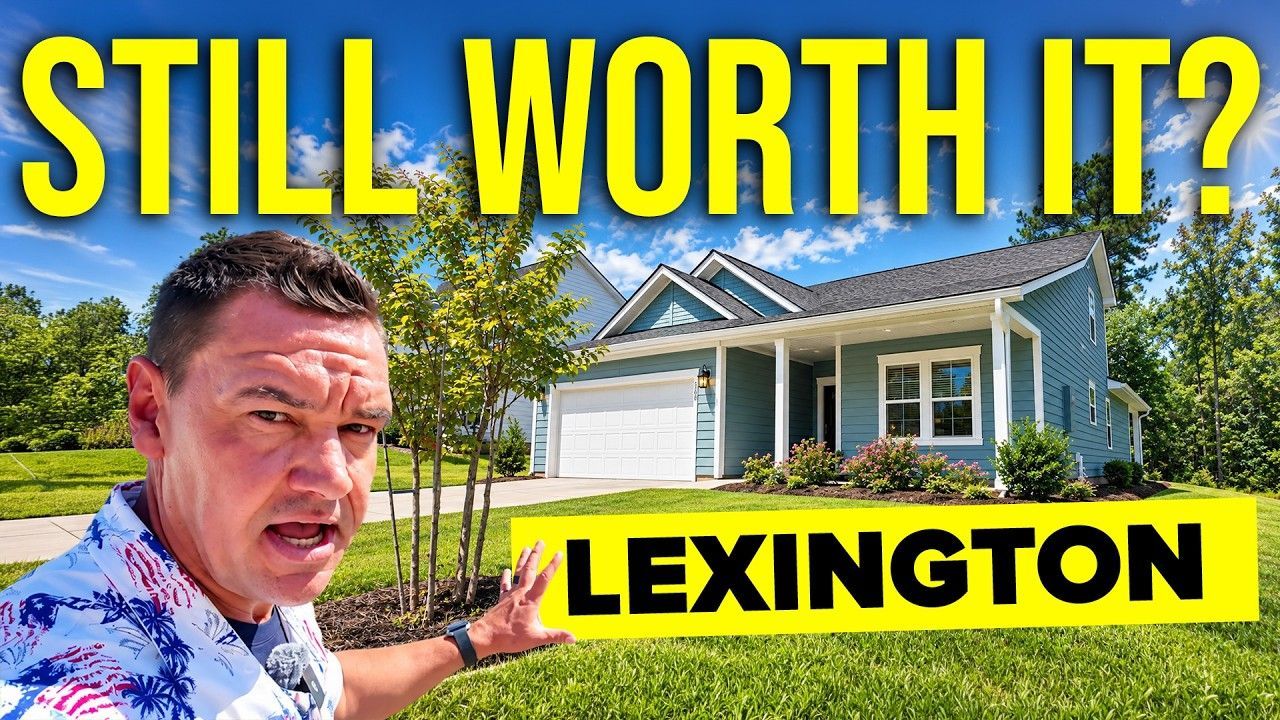
Living on Lake Murray, SC, offers beautiful waterfront views, boating opportunities, and access to some of the most desirable neighborhoods in Lexington County. But while the lake lifestyle looks appealing, buying a home here also means considering commute times, home prices, HOA rules, and how far you'll need to drive for everyday essentials.
Lake Murray spans approximately 50,000 acres across four counties and attracts buyers looking for waterfront properties, established neighborhoods, and a quieter suburban lifestyle near Columbia, South Carolina. However, living on the Lexington side of the lake comes with trade-offs, especially if you commute to downtown Columbia during morning rush hour.
In this guide, we'll explore what it's really like to live near Lake Murray, including home prices, neighborhood features, traffic patterns, and the differences between waterfront and off-water properties. We'll also compare neighborhoods like Cherokee Shores, Governor's Grant, Sterling Bridge, Sandpiper Square, and Woodcreek to help you understand which areas may fit your lifestyle and budget.
If you're considering moving to Lake Murray, SC, this guide will help you look beyond the scenic views and decide whether the area's lifestyle, commute, and housing options are right for you.
Table of Contents
- Lake Murray Area (Lexington Side): Pricing, Commute & What Off-Water Really Means
- Cherokee Shores: Cove Living Adds Five Minutes to Your Drive
- Governor's Grant: Estate-Style Homes with Swim Team & Clubhouse
- Sterling Bridge: New Construction Wrapped Up Less Than a Year Ago
- Sandpiper Square: The First Walkable Neighborhood to Downtown Lexington
- Woodcreek: Established Feel for Buyers Who Want Character
- Lake Murray vs Off-Peak Commute: When Traffic Actually Clears
Lake Murray Area (Lexington Side): Pricing, Commute & What Off-Water Really Means
Lake Murray spans four counties, but I'm isolating the Lexington side, zip code 29072, because that's where most of the lake neighborhoods sit and where people call me about. The lake itself is massive: 50,000 acres, multiple public boat launches, and a dam walk that's over a mile and a half if you want to get out and stretch your legs. It's a legitimate lake lifestyle, not just a marketing pitch. But living here means understanding the trade-offs, and the biggest one is the commute. At 7 AM on a Tuesday, it took me 45 minutes to get from Cherokee Shores to the state capitol in downtown Columbia. Google Maps said 35 minutes when I checked at midnight, so that tells me something: school traffic and work traffic stack on top of each other, and you're not avoiding it unless you're on a shift schedule.
Pricing on Lake Murray is all over the map depending on whether you're on the water or off. The cheapest on-water sale I found in the last year was $540,000 for a 1,715-square-foot fixer-upper, three beds, three baths, and it needed more than just paint and flooring. The average on-water home sold for $1.7 million. Off-water neighborhoods in the Lake Murray corridor averaged $595,000, but that number includes everything from older ranch homes to newer subdivisions. If you isolate just the neighborhoods people are calling me about, Cherokee Shores, Governor's Grant, Sterling Bridge, you're looking at $532,000 to $734,000 depending on the neighborhood and whether it's a resale or new construction.
Here's what throws people off: most of these neighborhoods were developed in the 1990s and early 2000s, and they're not master-planned communities. You'll pass three different neighborhoods in a quarter-mile stretch, each with 40 to 80 homes, and each one has different rules, different amenities, and different pricing. Some have pools and clubhouses. Some have swim teams. Some have nothing but an HOA that tells you not to park your boat in the front yard. That's the reality of this area, it's not one big planned development with a central amenity center. It's a collection of smaller neighborhoods, and you have to dig into each one to figure out what you're actually getting.
The roads around Lake Murray are mostly two lanes with no streetlights and no sidewalks. If you're coming from an area where you can walk or bike to the grocery store, that's not happening here unless you live in the new Sandpiper Square development near downtown Lexington, which I'll talk about later. You're car-dependent, and you're dealing with unincorporated areas where there's no town code enforcement on aesthetics. I had a client ask me about a house she saw on Google Street View where someone had a tractor parked in the yard. I told her there's no HOA, and she said, "But aren't there town rules?" No. These are unincorporated areas. If someone wants to park ten cars in their yard, that's their prerogative. If you want no HOA, that's the trade-off.
The morning commute is the real test. I left Cherokee Shores at 7 AM, and the first backup hit at New Providence Elementary School on the main route. There's a crossing guard, and parents are dropping off kids, and the line backs up traffic for a solid five minutes. That's not unique to this area, school drop-off traffic is a thing across Lexington County, but it stacks on top of the commute traffic, and that's what makes the 7-8 AM window the worst. If you're working a shift schedule and leaving at 6 AM, you're not hitting this. If you're driving to Columbia at 11 AM for brunch, it's smooth. But if you're trying to get to an office downtown by 8 AM, you're sitting in this.
The route options are interesting because you're not locked into one path. You can take the route through downtown Lexington, or you can take Sunset Boulevard (Highway 378) and hit the interstate from there. Both routes are within five minutes of each other, and locals learn which one to take depending on whether there's an accident or construction. Sunset Boulevard is the main shopping corridor, Walmart, Target, Home Depot, Lowe's, gyms, Prisma Health urgent care, and it's also a congestion point. Downtown Lexington narrows from two lanes to one, which creates an afternoon backup, but it's intentional traffic calming. They don't want it to be a stroad where people are flying through at 50 miles per hour. It's a road, and it slows you down.
Lake Murray neighborhoods on the Lexington side are not walkable unless you're in Sandpiper Square. Most of them don't have sidewalks. Most of them don't have streetlights. You're driving to the grocery store, you're driving to the gym, and you're driving to downtown Lexington if you want to go to a restaurant or a concert at the Icehouse Amphitheater. That's the lifestyle here, and if you're coming from an area where you can walk to coffee or bike to the park, this is going to feel different. The lake is the draw, but the infrastructure around it is suburban sprawl, not a walkable downtown.
Cherokee Shores: Cove Living Adds Five Minutes to Your Drive
Cherokee Shores is where I started the drive, and it's one of the cove neighborhoods on Lake Murray. That means you're tucked into a quieter section of the lake, away from the main road, and it adds about five minutes to your commute compared to neighborhoods like Sunset Bay or Settler's Point that sit right off Highway 378. The average off-water home in Cherokee Shores sold for $734,000 in the last year. The one on-water sale I found was $1.45 million. The HOA prohibits boat parking in the front yard, which is standard for most lake neighborhoods around here, and honestly, that surprises people who assume lake living means you can do whatever you want with your property.
The cove location is the trade-off. You're farther from the main road, so you're adding time to every trip, whether it's the commute to Columbia, the drive to Publix, or the run to Target on Sunset Boulevard. It's not a dealbreaker, but it's something you need to factor in if you're comparing neighborhoods. Some people love the cove feel because it's quieter and more private. Others want to be closer to the main road so they're not adding five minutes to every errand. That's the kind of thing we help people figure out when they're narrowing down which lake neighborhood fits their lifestyle.
Cherokee Shores is an established neighborhood with that 1990s to early 2000s feel. The homes are larger, the lots are decent-sized, and it's not a brand-new subdivision where everything looks the same. If you're looking for that newer construction feel, this isn't it. If you want an established neighborhood with mature trees and a mix of home styles, Cherokee Shores checks that box. The HOA includes basic maintenance, but it's not a neighborhood with a pool or a clubhouse. That's hit-or-miss across the Lake Murray corridor, some neighborhoods have amenities, some don't, and you can't assume just because there's an HOA that you're getting a community pool or a swim team.
Governor's Grant: Estate-Style Homes with Swim Team & Clubhouse
Governor's Grant is one of the larger established neighborhoods on the Lexington side, and it's the one I get asked about most by relocating buyers. The average sale price is $578,000, and it's an HOA neighborhood with a community pool, a swim team, and a clubhouse. The homes are estate-style, larger brick homes built in the 1990s to early 2000s, with half-acre-plus lots. If you're coming from an area where subdivisions all have amenities, Governor's Grant is one of the few around here that actually delivers on that expectation.
The neighborhood loops around and connects with Sterling Bridge, which is newer construction, so you're seeing a mix of older established homes and newer builds depending on which section you're in. Governor's Grant has that traditional subdivision feel that a lot of relocating buyers are looking for, mature trees, larger lots, and homes that don't all look the same. It's not a cookie-cutter neighborhood, and that's part of the appeal. The swim team is a big draw for families, and the clubhouse gets used for neighborhood events, so there's a sense of community here that you don't always get in the smaller lake neighborhoods.
The pricing at $578,000 puts it in the middle of the pack for off-water lake neighborhoods. You're not getting waterfront access, but you're getting the amenities and the established feel that a lot of people are willing to trade for. The commute from Governor's Grant is about the same as Cherokee Shores, you're still hitting that school traffic at New Providence Elementary, and you're still dealing with the choke point where downtown Lexington narrows to one lane. But you're not in a cove, so you're not adding that extra five minutes to get to the main road.
Sterling Bridge: New Construction Wrapped Up Less Than a Year Ago
Sterling Bridge is the newer construction option on the Lexington side, and it wrapped up less than a year ago. The average sale price is $532,000, which makes it the most affordable of the featured neighborhoods in this blog. It's an HOA neighborhood, and there are resales available now, so you're not limited to just new builds. The home styles vary, you've got patio homes on the smaller end and larger single-family homes on the bigger lots, so there's a range depending on what you're looking for.
Sterling Bridge loops around to connect with Governor's Grant, so you're in the same general area as far as commute and access to shopping. The benefit of Sterling Bridge is you're getting newer construction without paying the premium you'd pay in a brand-new subdivision that's still under development. The homes are built, the streets are paved, and the neighborhood is established enough that you're not dealing with construction trucks and dust every time you leave the house. That's a big deal for people who want newer construction but don't want to live in an active construction zone.
The trade-off with Sterling Bridge is you're not getting the estate-style lots you'd get in Governor's Grant. The lots are smaller, the homes are closer together, and it's more of a traditional suburban subdivision layout. If you're coming from an area where newer subdivisions have tight spacing, this won't surprise you. If you're expecting half-acre lots and mature trees, Sterling Bridge isn't that. It's newer, it's clean, and it's priced lower than the older established neighborhoods, but you're giving up some of that space and character.
Sandpiper Square: The First Walkable Neighborhood to Downtown Lexington
Sandpiper Square is the first true walkable neighborhood to downtown Lexington, and it's still under development. It's about a mile from the Icehouse Amphitheater, and the layout is Charleston-style, tight spacing, minimal yard space, and sidewalks that actually connect to downtown. If you've ever walked around downtown Charleston, you know what I'm talking about. The homes are single-family, but they're not traditional suburban lots. You're not getting a big backyard or a front yard where you can park an RV. You're getting an urban layout with boutique shops and restaurants mixed in, and the whole point is you can walk or bike to downtown Lexington instead of driving everywhere.
The development includes a parking center called Flight Deck, and there are already restaurants open there, pizza places, and more coming. The renderings show boutique retail mixed in with the residential, so it's supposed to feel like a walkable downtown district, not just a subdivision with sidewalks. That's a big shift for Lexington, where most neighborhoods are car-dependent and you're driving to everything. Sandpiper Square is the exception, and if walkability is a priority for you, this is one of the only newer options in the area.
The trade-off is the tight spacing. If you're used to traditional single-family lots with space between houses, Sandpiper Square is going to feel cramped. The yards are small, the homes are close together, and it's designed for people who want to walk to coffee and dinner, not people who want a big yard for their kids to play in. That's not a criticism, it's just a different lifestyle. Some people love it because they can walk to the amphitheater and grab dinner downtown without getting in the car. Others hate it because they feel like they're living on top of their neighbors. You have to know which one you are before you commit to this neighborhood.
Woodcreek: Established Feel for Buyers Who Want Character
Woodcreek is one of the established neighborhoods on the Lexington side, and it's popular with clients who want that older neighborhood character instead of a brand-new subdivision. I don't have a ton of sales data to share because it's a smaller neighborhood, but the appeal is the same as Governor's Grant, mature trees, larger lots, and homes that were built in the 1990s to early 2000s. It's not flashy, it's not new construction, and it's not trying to be. It's just a solid established neighborhood for people who want to live near Lake Murray without paying the premium for waterfront access.
The commute from Woodcreek is the same as the other neighborhoods in this area, you're hitting the school traffic, you're dealing with the choke point in downtown Lexington, and you're sitting in the merge onto I-26 during rush hour. But if you're leaving at 11 AM or coming home in the evening after the school dismissal traffic clears, it's a smooth drive. That's the pattern across the Lake Murray corridor: the 7-8 AM window is brutal because you're stacking school drop-off on top of commute traffic, but the rest of the day is manageable.
Lake Murray vs Off-Peak Commute: When Traffic Actually Clears
The biggest question I get about living on Lake Murray is whether the commute is worth it, and the answer depends on when you're driving. If you're leaving at 7 AM to get to an office in downtown Columbia by 8 AM, you're sitting in traffic for 45 to 50 minutes. If you're leaving at 6 AM for a shift at the hospital, you're missing the school traffic and the worst of the commute, and it's closer to 35 minutes. If you're driving to Columbia at 11 AM or in the evening after school dismissal clears, it's smooth. The traffic is not stop-and-go like you'd see in a bigger metro. It's slower, it's congested at certain choke points, but you're still moving.
The school traffic is the wild card. New Providence Elementary on the main route backs up traffic every morning because there's a crossing guard and a line of parents dropping off kids. River Bluff High School on Corley Mill Road does the same thing in the afternoon. If you're trying to time your commute around school zones, you're playing a guessing game, and honestly, most people just accept that the 7-8 AM window is going to take longer. The benefit of living in the Lake Murray corridor is you have multiple route options. If there's an accident on the route through downtown Lexington, you can take Sunset Boulevard and hit the interstate from there. Both routes are within five minutes of each other, and locals learn which one to take depending on the day.
The interstate traffic is not as bad as people expect. I've had clients come from the West Coast and say, "This is your version of traffic?" because they're used to stop-and-go gridlock where you're sitting for an hour to go ten miles. Our traffic is slower, it's congested at the merge points, but you're still moving. Malfunction Junction, the interchange where I-20, I-26, and I-126 all come together, is the worst spot, and they're redoing it right now to add bypasses so you're not crossing paths with people trying to merge at the last second. In a few years, that's going to be much better, but for now, it's a choke point.
The trade-off with Lake Murray living is you're giving up convenience for lifestyle. You're not walking to the grocery store. You're not biking to the gym. You're driving to Publix, you're driving to Target, and you're driving to downtown Lexington if you want to go to a restaurant or a concert. The lake is the draw, the boating, the water access, the scenic views, but the infrastructure around it is suburban sprawl, and you have to be okay with that. If you're someone who wants walkability and quick access to everything, Lake Murray is not the right fit. If you're someone who wants the lake lifestyle and you're willing to drive 15 minutes to the grocery store and 45 minutes to work, then it makes sense.
Frequently Asked Questions About Living on Lake Murray SC
What does it cost to live on Lake Murray in Lexington SC?
On-water homes on the Lexington side of Lake Murray average $1.7 million, with the cheapest sale in the last year at $540,000 for a fixer-upper. Off-water neighborhoods in the Lake Murray corridor range from $532,000 to $734,000 depending on the neighborhood and whether it's new construction or a resale. The overall average for single-family homes off the lake in zip code 29072 is around $433,000, but that includes older ranch homes and smaller properties that most relocating buyers aren't considering.
Do Lake Murray neighborhoods have boat slips and storage?
Some do, some don't, and it's all over the map. Some neighborhoods have a day dock where you can load the boat but not store it. Some have a private boat ramp for residents. Some have deeded boat slips that were sold off when the neighborhood was built, and when you buy a house, you either get the slip with it or you buy it separately from the seller. Some neighborhoods have a waitlist for boat slips, and depending on how fast homes turn over, you might sell your house before you get off the waitlist. The HOA rules also prohibit parking your boat in the front yard in most lake neighborhoods, so if you're assuming you can just park it at the house, that's not happening.
Is the commute from Lake Murray to downtown Columbia really that bad?
It depends on when you're driving. At 7-8 AM during school and commute traffic, it's 45 to 50 minutes from Cherokee Shores to downtown Columbia. At midnight, Google Maps says 35 minutes. If you're on a shift schedule and leaving at 6 AM, you're missing the worst of it. If you're driving to Columbia at 11 AM or in the evening, it's smooth. The traffic is not stop-and-go gridlock, it's slower at certain choke points, but you're still moving. The school drop-off traffic at New Providence Elementary and the merge onto I-26 at Malfunction Junction are the two biggest backups.
Are Lake Murray neighborhoods walkable?
No, with one exception. Most Lake Murray neighborhoods on the Lexington side were built in the 1990s and early 2000s, and they don't have sidewalks or streetlights. You're car-dependent, and you're driving to the grocery store, the gym, and downtown Lexington. The exception is Sandpiper Square, which is a new Charleston-style development near downtown Lexington with sidewalks and boutique shops. It's about a mile to the Icehouse Amphitheater, and you can walk or bike to downtown Lexington restaurants. If walkability is a priority, Sandpiper Square is the only newer option in the area.
What's the difference between cove neighborhoods and main-road neighborhoods on Lake Murray?
Cove neighborhoods like Cherokee Shores are tucked into quieter sections of the lake, away from the main road, and they add about five minutes to your commute compared to neighborhoods like Sunset Bay or Settler's Point that sit right off Highway 378. The cove location is more private and quieter, but you're adding time to every trip, whether it's the commute to Columbia or the drive to Target. Some people love the cove feel, others want to be closer to the main road so they're not adding five minutes to every errand.
Do Lake Murray neighborhoods have HOAs, and what do they cover?
Most Lake Murray neighborhoods on the Lexington side have HOAs, and they were developed in the 1990s and early 2000s when HOAs became standard. The HOA rules prohibit boat parking in the front yard, but the amenities are hit-or-miss. Some neighborhoods have pools, clubhouses, and swim teams. Some have nothing but basic maintenance. You can't assume just because there's an HOA that you're getting a community pool or a boat ramp. Older areas like Irmo, Hopkins, and downtown Columbia have more no-HOA options because those neighborhoods were built in the 1960s, 1970s, and 1980s before HOAs were common. If you want no HOA on the Lexington side, your options are limited, and you're dealing with unincorporated areas where there's no town code enforcement on aesthetics.
If you're weighing Lake Murray living against other Columbia suburbs, or if you want help figuring out which neighborhood fits your lifestyle and your commute, my team and I help relocating buyers every week. We're not just showing you houses, we're helping you understand what daily life actually looks like in each area so you're not surprised six months after you move. Call or text me at 803-999-4663 to walk through your options.
Brandon Garon
We provide honest and transparent insights into relocating to the Midlands of South Carolina. Brandon's mission is to help you confidently decide if South Carolina is right for you—without hidden fees or sales pitches.
Call / Text: 803-999-4663


Recent Posts