Charming Small Towns Near Columbia, SC Worth Exploring
There's something drawing more people back to small-town America, and South Carolina is part of that trend. Many families relocating to the Columbia area aren't necessarily looking for a specific city or neighborhood. They're looking for a certain lifestyle: charming downtown streets, local restaurants, community festivals, historic homes, and the feeling of living somewhere people still know their neighbors. It's the kind of small-town charm many remember from growing up in the '80s and '90s, or see in their favorite HGTV shows.
But there's a trade-off to consider before choosing small-town living near Columbia, SC. Some buyers discover that the quieter pace, extra space, and close-knit community are exactly what they've been looking for. Others love the atmosphere but realize they're not quite ready to give up the convenience of suburban living. After helping hundreds of families relocate to the Columbia area, I've learned that finding the right place involves more than browsing homes online or driving through a few towns. You also need to understand what everyday life looks like once you move there.
In this blog, we'll explore three South Carolina towns worth considering: Camden, Prosperity near Lake Murray, and Batesburg-Leesville, along with Chapin as an honorable mention. Each offers a different version of small-town living, from historic charm and waterfront access to rural surroundings and growing suburban conveniences. More importantly, we'll look at the trade-offs that could make or break your decision about where to call home.
Table of Contents
- Camden: Historic Charm and Horse Country East of Columbia
- Prosperity: Tiny Town Square Right Up Against Lake Murray
- Batesburg-Leesville: Traditional Small-Town South Carolina Further West
- Chapin: The Honorable Mention That Sparks the Debate
- Which Small Town Near Columbia Is Right for You?
- Conclusion
Camden: Historic Charm and Horse Country East of Columbia
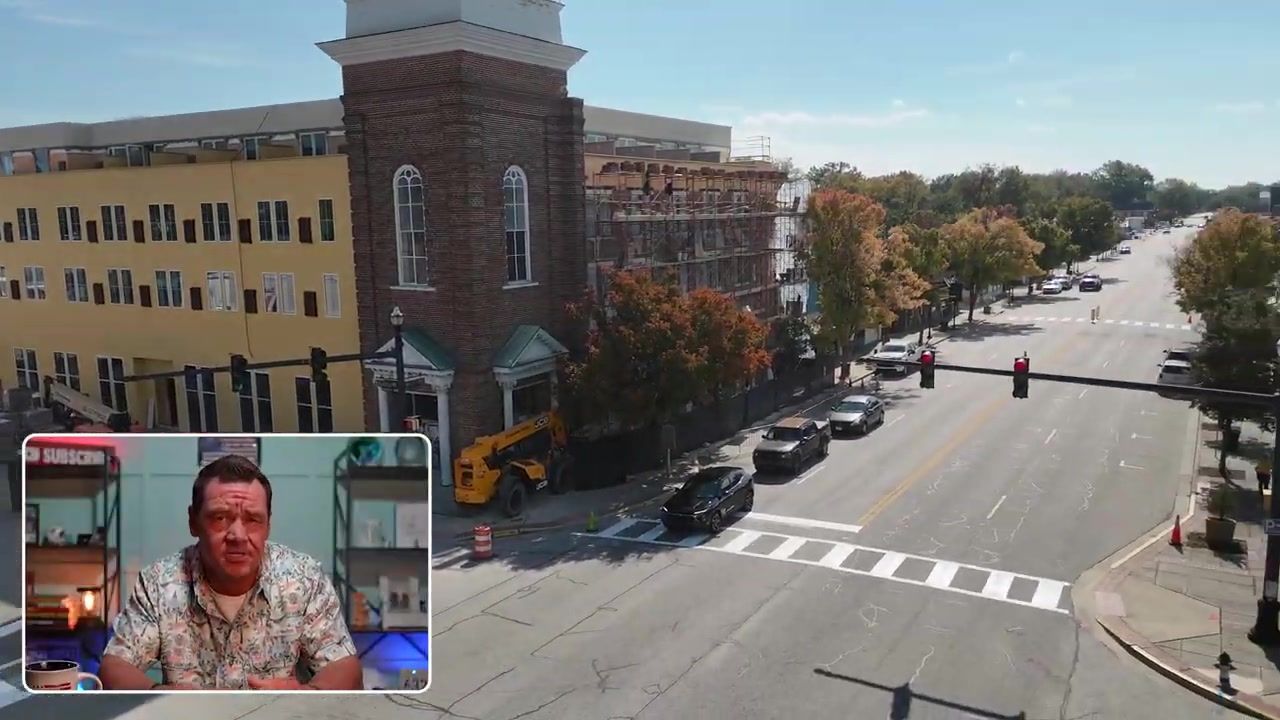
Camden is probably the easiest town on this list for me to show somebody and have them immediately understand what we're talking about here. Look, this isn't just a subdivision with the word "village" slapped on the entrance. Camden actually has history, it's South Carolina's oldest inland city. When you get into the center of town, it feels different from a lot of the newer suburbs around Columbia because you've got Broad Street with older storefronts, historic homes, mature trees, local restaurants, coffee shops, antique stores, and boutiques. There's honestly enough actually happening downtown that it doesn't feel like somebody preserved three buildings and called it a historic district.
Community events happen here: concerts on the town green, festivals, art galleries, and restaurants mixed right into the downtown. Camden has something else that gives it a personality almost none of the other places around Columbia can copy, horse country. This is Carolina Cup territory. You'll see those horse farms and larger properties around the area, and you get these pockets that can feel surprisingly rural considering you're still connected back toward Columbia by I-20.
So when somebody tells me, look, I want charm, I want some history, I don't necessarily want to live in a giant new construction neighborhood, but I also don't want to feel like I've disappeared into the middle of nowhere, Camden gets interesting pretty quickly. Housing here is completely different depending on where you look in the area. Closer into town, you've got those older houses where the architecture and lot can be part of that appeal. I mean, you literally have homes from the 1800s. Move further out, suddenly you get more land, privacy, and that true rural setting.
Yes, there is new construction creeping into this market too. That's an important distinction. Small town doesn't automatically mean nothing is changing in these areas. Camden itself has been actively seeing additional residential and commercial investment outside that historic core that they preserve. I wouldn't show up assuming you found a place frozen in the 1990s, but I also wouldn't expect it to suddenly look like Lexington next year.
Day-to-Day Infrastructure in Camden
This is kind of the first clue to that bigger trade-off I mentioned earlier. Camden actually has more day-to-day infrastructure than some of the towns we're about to visit. You've got grocery stores and some larger retailers just up the road. You got restaurants and even healthcare right there in Camden. So you're not completely dependent on Columbia or Northeast Columbia. That's going to matter more than you probably realize by the end of this blog.
Prosperity: Tiny Town Square Right Up Against Lake Murray
Our next town takes that small-town concept another step. We're going in basically the opposite direction and heading to Lake Murray, and this is Prosperity . If Camden feels like an established small city with a historic downtown, Prosperity feels like somebody shrunk the whole thing. I mean, the downtown itself is tiny. And look, I mean that affectionately. You've got the town square, local businesses, the old railroad depot, handful of restaurants.
This is one of those towns where community events aren't marketing language on a developer's brochure. The town actually closes down the square for events. There's the annual Shoppers Walk around Christmas, and then you got Prosperity's Hoppin', which brings vendors, local businesses, and activities right there downtown. This is much closer to the picture some people have in their head when they tell us, look, I don't need a lot, I just want a quiet little town. We've had people attracted to Prosperity for that.
But the location of Prosperity is what makes this one especially interesting. You are northwest Columbia and you're getting into Newberry County. But more importantly, what's attracted a lot of our clients to the area is you're right up against Lake Murray, and that creates a very strange contrast in the housing market. You can have an older modest house around town, go further out and find acreage, find manufactured homes, even find new construction, and then keep heading toward the lake, and suddenly you're looking at waterfront properties that can cost dramatically more.
The Lake Murray Effect on Prosperity's Housing Market
Don't make the mistake of thinking, hey, tiny town equals everything is inexpensive housing, because once Lake Murray gets involved, all bets are honestly off. That's actually one of the things I've talked about in my Lake Murray blogs. There are sections further around the lake where you can get more property. Your money goes further, different type of setting than you might find closer to Lexington, Irmo, or Chapin. But you are making a trade, and Prosperity is where that trade-off starts becoming a little more noticeable.
To the right person, that's the entire point. If your dream is an evening where things actually get quiet, where your house might sit on a bigger piece of property, where you recognize people when you go into town, Prosperity starts checking boxes that places like Irmo probably never will.
Small Town Doesn't Always Mean Charming Downtown
Before we go to what might be the most traditional small town on the list, there's one distinction I think is really important here. Sometimes people tell us they want a small town when what they actually mean is, hey, I want a small, charming town center. Those aren't necessarily the same thing.
There are several places around Columbia that look on a map like they should give you exactly what we're talking about. Take Gilbert , for example. This happens a lot. Gilbert absolutely has that small community feel. You've got the Gilbert Peach Festival, local traditions, more rural surroundings, larger properties as you head outside of town. But we've had people show up expecting this quaint little downtown where they're going to walk between restaurants and shops, and that's not really what Gilbert is. I had one client drive through what you would call downtown Gilbert and basically say, yeah, I probably never need to do that again. And I knew exactly what they meant.
It's not a knock on Gilbert. We've gone to their festivals. It's just that if you're picturing a Main Street lined with coffee shops, boutiques, and restaurants, there really isn't that traditional downtown experience. The community is the attraction, not necessarily the downtown. Same thing with Hopkins . It can surprise people in a similar way. You may see it on the map, see the rural surroundings, see older homes and acreage, and picture another little southern town center. But again, you drive it and there's not this big destination downtown waiting for you.
I think that's an important distinction when you're researching these places online, because you might actually love Gilbert or Hopkins if what you're looking for is more land, fewer subdivisions, a quieter setting, and your money to go further or simply get away from suburban Columbia. But if what you're chasing is that HGTV version of small-town America where you park the car, walk Main Street, grab lunch at a local restaurant, and wander to a few stores, you need more than a small population. You need that actual town center.
Batesburg-Leesville: Traditional Small-Town South Carolina Further West
Let's head west from Lexington to Batesburg-Leesville . First, yes, technically Batesburg and Leesville started as two separate towns. They kind of eventually got combined into one name, even though the feel can change quite a bit depending on which direction you're heading, toward the lake or further out into the more rural farmland. But honestly, even the combination feels appropriately small-town South Carolina.
When people tell me they want something further removed from the suburban growth around Columbia, this is the type of place I start thinking about. You've got Main Street, these older homes, local businesses, more rural property as you head outside of town. And houses here can sometimes make somebody coming from Lexington do a double take because historically this has been a much more affordable market. I mean, we had a neighbor of ours move out there to trade that suburban living in for more land at the same price.
The South Carolina Poultry Festival and Community Identity
What I really think illustrates Batesburg-Leesville is something like the South Carolina Poultry Festival . They take over Main Street. There's a parade, local vendors, music, food. People come out from all around the area for these types of festivals. It's one of those events where you're not pretending to create the community. The town is the community. And look, if you've lived in the area long enough, you're bound to hear about Shealy's Barbecue . Trust me when I say it's worth the drive.
That's the lifestyle somebody is usually talking about when they tell us, hey, I want to slow things down. You are further out. There's more agriculture around, more open land. You're going to see properties that would be very difficult to replicate the closer you get toward Columbia and in those newer suburbs. And even new construction, just to be honest, is beginning to find its way further west. That's something I'm watching very closely right now because as land and housing become more expensive closer to Columbia, we're seeing builders start to explore markets people wouldn't have even considered major new construction destinations several years ago.
Batesburg-Leesville Today: Still Dramatically Different
Honestly, there's even a Walmart and a car dealership now. So Batesburg-Leesville isn't immune to growth either. But today it is still a dramatically different lifestyle than somewhere like Lexington, Irmo, and even Chapin. That brings us back to the question that so many buyers have after seeing these places in person.
Chapin: The Honorable Mention That Sparks the Debate
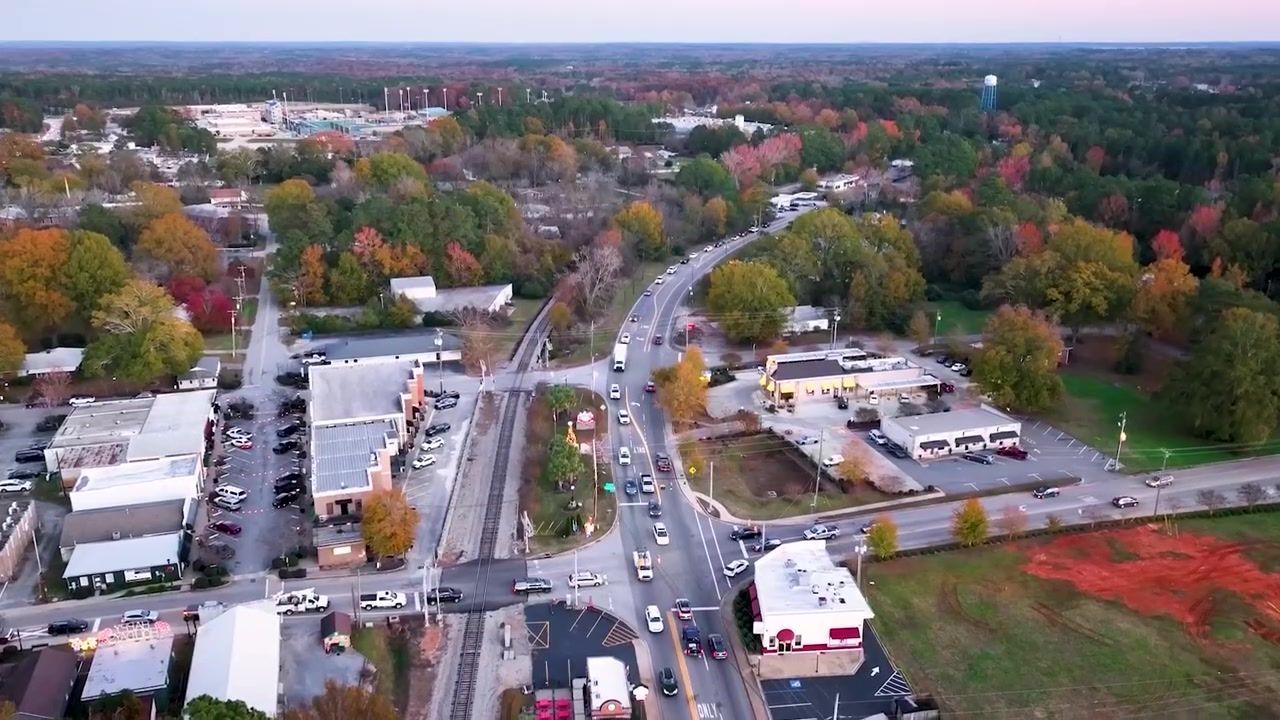
Then there's almost the opposite problem, a town that absolutely has the downtown and the identity, but has grown enough that some longtime locals aren't sure they'd still call it small-town living. And that's Chapin .
Look, technically Chapin is absolutely still a small town. There's still a little downtown. There's a lot of local restaurants and businesses out there. Lake Murray is right there and a huge influence on the area. It still has community events and a lot of the things people associate with that small-town living. But talk to somebody who's been around Chapin a long time and you might get a completely different answer because Chapin is also a perfect example of what happens when people discover the small towns. The growth follows. You see more new neighborhoods, more traffic, more of that commercial development, overcrowded schools, more people moving further northwest from Columbia. Chapin has increasingly become one of Columbia's major suburban relocation markets.
Perspective Matters: What Feels Small to You?
Depending on where you're coming from, you may drive through Chapin and think, this is exactly the small town I've been looking for. I mean, we have a ton of clients who bought in Chapin, even some on our team that live there. But someone who's lived there for 25 years might look at you and think you're crazy. To them, that small town is slowly disappearing.
Here's kind of the elephant in the room. Both can be true because this is where perspective matters. If you're relocating from Long Island, New Jersey, South Florida, or Southern California, Chapin may feel incredibly small. But if your definition is I don't want master-planned communities, I don't want national builders, I don't want traffic, I don't want Publix and all those suburban things around me, then Chapin probably isn't the example you're looking for anymore. That's actually why I'm making it the honorable mention instead of one of the main three. If Chapin represents one end of that transformation, Batesburg-Leesville is much closer to the other.
Which Small Town Near Columbia Is Right for You?
After hearing about some of these places, you may already be jotting down which ones you should explore further. The reality is we've had people absolutely fall in love with these places and buy there, but others show up and still buy somewhere else. Most of the time, those houses weren't the problem. The town itself wasn't the problem, it was actually the dream they described when they first called us.
I personally resonate with a lot of these places. Look, I know I tell people I'm from California, and if you're not there, you're probably picturing what you saw on TV or places like Los Angeles, San Diego, or San Francisco. But that wasn't really the California I grew up in. We lived in the suburbs, and back in the '80s and '90s, it felt like small-town America. Kids played outside until the streetlights came on. We had block parties. You'd go out to eat and run into your teacher, your neighbor, somebody your parents knew. Everybody who was everybody showed up to the local festivals. There was this real sense that people were connected there. So when I drive through towns like these around Columbia, part of me completely gets it. I understand why people want this.
The Practical Side: Commute, Conveniences, and Daily Life
But then that's where the practical side starts to matter. Someone drives through one of these towns and says, all right, this is exactly what I've been looking for. Then the questions start. Where's Target and Kohl's? Where's the bigger shopping? How far is Columbia? And probably the biggest one, what does the commute actually feel like out here every day?
Generally the further you get away from those core areas, the easier it becomes to find more of that character, land, slower pace, and that true sense of separation. But you're also further away from some of the things you may use every day. Maybe you work at University of South Carolina, Prisma, Fort Jackson, or somewhere in downtown Columbia. Maybe your kids have activities several nights a week, or maybe you're the person who realizes at 8 o'clock Sunday night that your kids need a poster board for school tomorrow. Suddenly that quiet town you loved on Saturday afternoon can feel a little different. That's the trade-off.
Don't get me wrong, I don't mean these places don't have anything. Camden and Batesburg-Leesville both have a Walmart and their Starbucks and more. There are restaurants, grocery stores, everyday conveniences, doctor's offices. And all these areas are changing with new housing and development continuing to show up. The reality is it's just not suburbia. The separation between these towns and larger suburban centers can make the towns feel further out than I think some people expect when just looking at the map.
Ask the Right Question Before You Buy
The question you need to ask isn't, is there anything out there? It's, is what's there enough for the way that you actually live? Because what one person says is inconvenient is another person's reason for moving to these places. That's also part of what helps protect this charm. A lot of people move to places like Prosperity or Batesburg-Leesville because they don't want them to become the next Lexington or Chapin. They're okay driving further for certain things because that trade-off is worth it for them. Trust me, some of the longtime locals will probably make that very clear in the comments section.
If you're considering one of these areas, don't only ask, do I like the town? Ask, do I like the lifestyle that comes with the town? Because that's the real question. That's why I'm not going to sit here and tell you, hey, Camden is the best one, or that everybody should go to Prosperity, or that Batesburg-Leesville is some hidden gem. Those cliché phrases sound great on YouTube. Trust me, they get clicks, they get likes, they get people to follow. But the reality is they're all just different versions of what people mean when they tell me they want small-town living. Figuring out which version actually fits your everyday life is exactly what we help our clients work through.
Conclusion
Camden, Prosperity, and Batesburg-Leesville each offer a different kind of small-town living near Columbia, SC. Whether you're drawn to Camden's historic charm, Prosperity's proximity to Lake Murray, or the extra space and rural feel of Batesburg-Leesville, there's plenty to consider. Chapin also deserves a mention, especially as an example of how growth can change a town over time.
Ultimately, the biggest trade-off is convenience versus lifestyle. You may find more land, character, and a slower pace further from Columbia, but you'll also be farther from everyday shopping, services, and other suburban conveniences.
Thinking about relocating to the Columbia area? Let our team help you find the right community for your lifestyle, budget, and daily needs. We've helped hundreds of families make this move and would love to help you, too. Reach out today, call or text me at 803-999-4663 and let's find the right place for you to call home!
FAQ
What is the main trade-off of living in small towns near Columbia, SC?
The main trade-off is separation from daily conveniences and suburban amenities. The further you get from core areas like Lexington, Irmo, or Chapin, the more character, land, and slower pace you'll find, but you're also further from Target, Kohl's, bigger shopping, and potentially your workplace in Columbia. What one person calls inconvenient is another person's reason for moving, and that separation is part of what protects the charm these towns still have.
Does Camden have enough infrastructure for daily living?
Yes, Camden has more day-to-day infrastructure than Prosperity or Batesburg-Leesville. You've got grocery stores, larger retailers nearby, restaurants, and healthcare right there in Camden. You're not completely dependent on Columbia or Northeast Columbia for everyday needs, which makes Camden a bit easier for buyers who want small-town charm without feeling too isolated.
Is housing in Prosperity affordable because it's a small town?
Not necessarily. Prosperity's housing market has a strange contrast because you're right up against Lake Murray. You can find older modest houses around town, acreage further out, manufactured homes, and new construction, but waterfront properties near the lake cost dramatically more. Don't assume tiny town equals inexpensive housing once Lake Murray gets involved.
Why is Chapin considered an honorable mention instead of a main small town?
Chapin technically is still a small town with a downtown, local restaurants, Lake Murray influence, and community events. But it has grown significantly and increasingly become one of Columbia's major suburban relocation markets. Longtime locals may not call it small-town living anymore because of the new neighborhoods, traffic, commercial development, and overcrowded schools. Perspective matters, if you're from Long Island or South Florida, Chapin may feel incredibly small, but if you want to avoid master-planned communities and national builders, it probably isn't the example you're looking for.
What should I ask myself before buying in one of these small towns?
Don't only ask, do I like the town? Ask, do I like the lifestyle that comes with the town? Consider your commute to work, your kids' activities, how often you need bigger shopping or conveniences, and whether you're okay driving further for certain things. The question isn't whether there's anything out there, it's whether what's there is enough for the way you actually live.
Are these small towns immune to growth and new construction?
No. Camden has been seeing residential and commercial investment outside its historic core. New construction is beginning to find its way into Batesburg-Leesville as builders explore markets further west. Even Prosperity has new construction available. As land and housing become more expensive closer to Columbia, builders are exploring markets people wouldn't have considered major new construction destinations several years ago. These towns are changing, but they're still dramatically different from Lexington, Irmo, and Chapin today.
Brandon Garon
We provide honest and transparent insights into relocating to the Midlands of South Carolina. Brandon's mission is to help you confidently decide if South Carolina is right for you—without hidden fees or sales pitches.
Call / Text: 803-999-4663


Recent Posts