West Lexington & Gilbert, SC: Affordable Homes and Lake Murray Living
I'm sitting at a red light in downtown Lexington, watching someone blow through the intersection ahead of me, and honestly it's the perfect way to start this tour. Because that impatience, that frustration with how long it takes to get anywhere despite being close on a map, is exactly what drives people to start looking west. West Lexington and Gilbert feel like a different world from the Lexington most people picture when they search homes here. You're trading the quaint downtown and the packed shopping corridors for 4-lane highways, active farmland, and new construction in the $200,000s. You're also trading Lake Murray waterfront that averages $1.5 million on the central Lexington side for lakefront that averages $793,000 out here, and brand-new lake neighborhood homes starting in the $400,000s instead of a million.
This isn't a tour of every Lexington neighborhood. This is the western edge, the part where growth is finally picking up after a decade of the county saying it would, the part where your commute depends on whether you can handle 4-lane highways through farmland instead of stop-and-go red lights through shopping centers. I'm going to show you what it actually feels like to live out here, what the trade-offs are, and why some buyers fall in love with this area while others realize they need to stay closer to town. We'll start on the south side along Highway 1, then circle back and take Highway 378 along the Lake Murray corridor so you can see how two routes that nearly parallel each other feel completely different.
If you're researching where to buy around Columbia and you keep seeing Lexington pop up at wildly different price points, this is why. Lexington isn't one market, it's a collection of areas that each have their own vibe, their own pricing, and their own trade-offs. Let's drive it.
Table of Contents
West Lexington: 4-Lane Highways and the Growth That Finally Arrived
West Lexington starts where downtown Lexington ends, right around the split between Highway 1 and Highway 378. You're still zoned for Lexington High School out here, but the density drops off fast. What was packed with shopping centers and neighborhoods a mile back opens up into farmland, scattered developments, and long stretches of trees. The big shift people notice right away is the roads, 4-lane highways instead of the 2-lane cove roads you'd deal with in Chapin or the stop-and-go red lights you'd sit through on the central Lexington side.
I had a client years ago who thought they wanted Chapin because they wanted that Lake Murray lifestyle. They visited, drove those narrow 2-lane roads winding through the coves, and the wife said she couldn't do it on a regular basis. She didn't want to get caught out there after dark. They ended up in West Lexington, and the 4-lane highways sold them. That's the convenience people underestimate until they're living it, how much easier it is to get back to Target or Publix or downtown Lexington when you're not crawling through traffic or navigating tight curves.
The county saw this coming a decade ago. When I worked for the county back then, they built all the county facilities out here, the sports complex, the ball fields on Ballpark Road, all of it, because they thought development was going to explode this direction. They widened the roads to 4-lane highways in anticipation. But the growth didn't happen the way they expected. Most of it went south instead, because that's where the land became available. South Lexington got the Lowe's grocery store, the Publix, the Planet Fitness, all that momentum. West Lexington sat and waited.
Now it's finally picking up. Target is under construction. Academy Sports is going in next to it. The recent renderings showed a Walmart in the background, which tells me the big retailers feel the momentum shifting this way. You've got Boho Pizza, a cool local spot, and a major shopping center near Lexington High School with Lowe's grocery store, Publix up the road, and Planet Fitness. The infrastructure is here. The 4-lane highways are here. What's missing is the density, and honestly that's part of the appeal for a lot of buyers.
Because here's the thing, this area has thousands of acres of active farmland. You can go to the grocery store and buy their produce. As long as those farms stay active, the left side of Highway 1 isn't developing anytime soon. You'll see pockets like the storage unit going in on the right, or neighborhoods like Hendricks Farms (Mungo Homes, first phase just about sold out, $400,000, $500,000 range), but the big gaps between them are going to take a long time to close. Some of those trees on the side of the road will eventually have for-sale signs, but that farmland? That could be generations before it sells.
So if you're expecting this area to look like South Lexington in five years, it won't. If you're hoping for a neighborhood on every corner, you're going to be disappointed. But if you want space, if you want room to breathe, if you want 4-lane highways that make your commute easier than the cove roads or the red-light gauntlet, this is where you start looking. Average new construction on the north side of Lexington runs around $500,000. Out here you're seeing neighborhoods in the $400,000s, and as we head into Gilbert, you'll see it drop even further.
Gilbert: New Construction in the $200,000s and What You're Trading for It
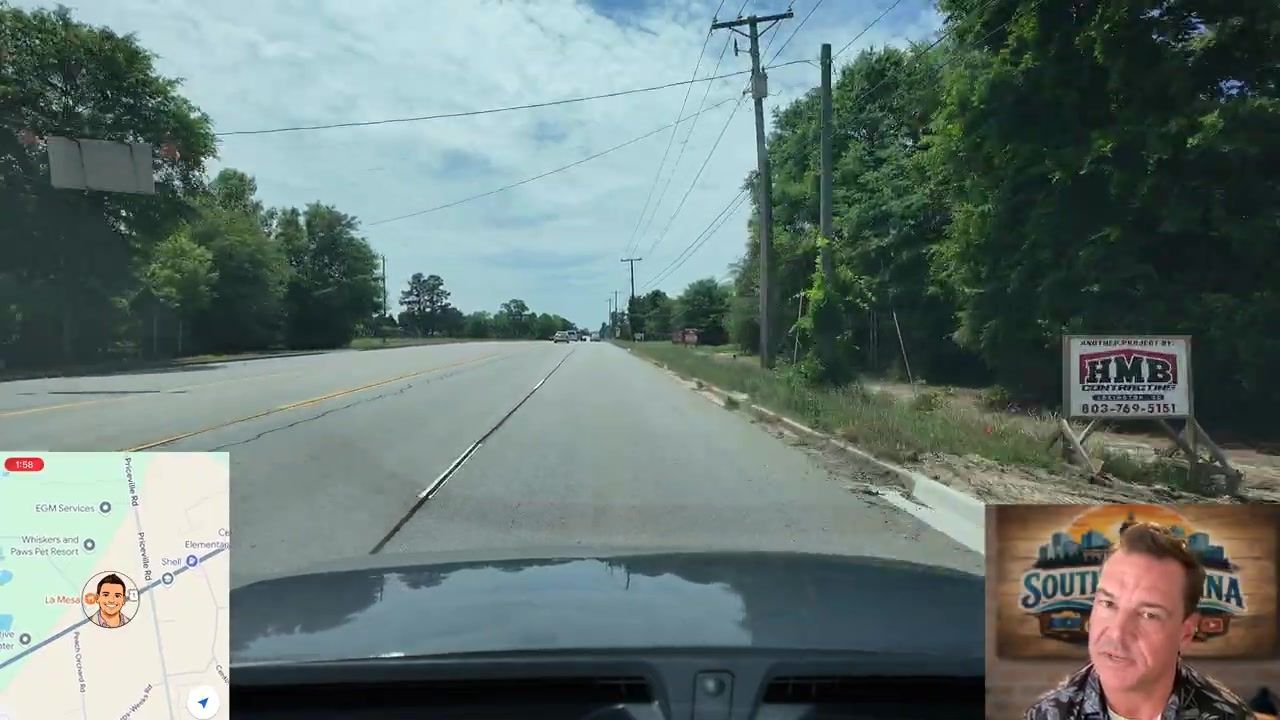
Gilbert is where people get confused about boundaries. I've had clients ask me, "When do we leave West Lexington and get to Gilbert?" and honestly the line blurs. You're still on the same 4-lane highway, still passing the same farmland, still zoned for schools at the top of the hill near Peach Festival Road. But Gilbert feels different. It's more rural. There's no downtown like you have in Lexington, just a country store and a stop-and-go gas station. The big event here is the Peach Festival on the 4th of July weekend, a country fair that draws people from all over. That's it.
What Gilbert has is affordability. Brand-new construction in the low $200,000s. That takes a lot of my relocation clients by surprise, because they've been searching in prime Lexington neighborhoods like Hendricks Farms or Carriage Estates where you're paying $400,000 to $500,000 to get in. Out here you're getting a brand-new home for $200,000, and yeah, there are trade-offs, but for a lot of buyers that price difference is worth it.
Winston Point is the big one people ask about, Mungo Homes and Haven Homes, amenities included, homes in the $200,000s. Taylor Hill (Lennar) has townhomes around $200,000 but no amenities. Cease Pond (D.R. Horton) is a little more expensive because you get larger lots, HardiePlank siding, more updates. All three are clustered in the same area, so you can drive through and compare what you're getting at each price point. Centerville Elementary is right there on the left as you come through, so you know the school situation.
The high school, middle school, and elementary schools are all at the top of the hill near Peach Festival Road. If you take Peach Festival Road or Priceville Road up to the top, that's where you hit the town of Gilbert, the country store, the gas station, the fairgrounds. It's small-town, rural, and a lot of active farmland. That farmland is going to prevent rapid growth the same way it does in West Lexington. You'll get pockets of development, but you're not going to see this area fill in quickly.
For shopping, you've got KJ's Market, a local grocery store, if you don't want to drive back to the Target or Publix in West Lexington. It's more of that small-town country-store feel, but it's there. Otherwise you're driving back to the shopping corridor near Lexington High School, which is only a few minutes on the 4-lane highway. That's the convenience people appreciate, you're rural, but you're not isolated.
The trade-off is the feel. This is very rural. You're not getting sidewalks. You're not getting a walkable downtown. You're getting space, affordability, and a slower pace. Some people love that. Others realize they want to be closer to town. If you're relocating here and you're used to suburban density, this might feel too spread out. If you're coming from somewhere more rural or you're prioritizing price over proximity, this is where your money goes the furthest in the Lexington market.
Lake Murray Corridor (Highway 378): Where Your Money Goes Further on the Water
Now let's circle back to that split and take Highway 378 instead. Same starting point, same general direction, completely different feel. Highway 1 is congested, stop-and-go, red lights every few hundred feet. Highway 378 is tree-lined, free-flowing, and way less developed. You're still heading west, still paralleling the same area, but the drive itself is night and day.
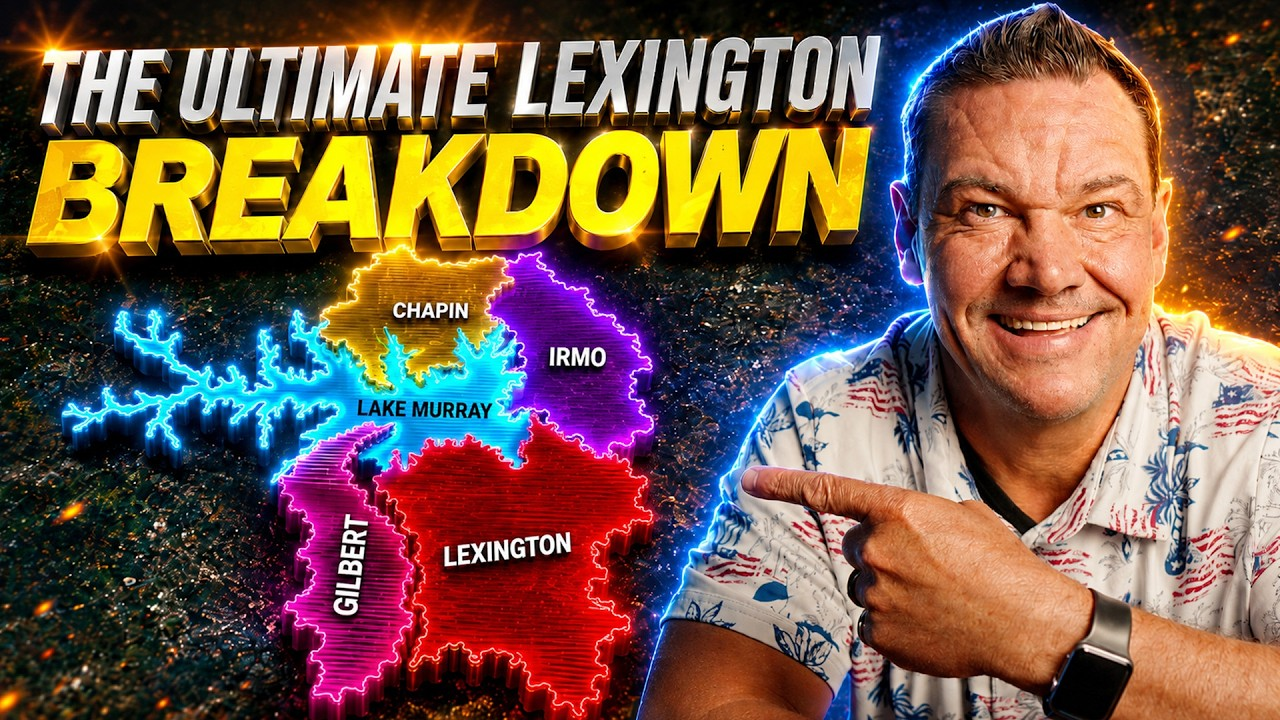
This is the Lake Murray corridor. You're not driving alongside the lake the whole way, development blocks most of the continuous views, but you're close to it, and the opportunities here are what make this route worth taking. Lake Murray isn't a touristy lake. There are no hotels on the water. Most of the development is residential, with some commercial on the Irmo side. The dam is about 15 minutes from here, and there's a public boat ramp this direction that's free year-round. If you're launching a boat and you don't want to deal with the chaos at the dam during the summer, this is your option.
Pricing on Lake Murray is where this gets interesting. I ran the numbers, and honestly I double-checked them because I thought I did something wrong. Over the last year, the average price for a Lake Murray home on the Lexington and River Bluff side was $1.5 million. Out here on the western side, the average was $793,000. That's almost double. Now, the houses on the Lexington side are a little larger on average, but the price-per-square-foot difference is still significant. Your money just goes further out here.
And if you're looking at lake neighborhoods, not waterfront, but neighborhoods with lake access, the difference is even more dramatic. I've had clients buy in lake neighborhoods in central Lexington where the homes aren't even on the water, and those houses are a million dollars. Out here, there's a brand-new construction lake neighborhood (I'm not naming it because we didn't drive directly to it, but it's just past the intersection where we turned) where homes are starting in the $400,000s to $500,000s. My clients bought a half-acre lot out here in that price range. In Lexington, you'd be paying a million for that.
Sunset Bay is the one people always ask about, the pastel-colored homes right on the water that I call the Florida retirement houses. They're on the right as you come through. On the left is The Retreat at Lake Murray, a huge development going in right now with single-family homes, patio homes, lake access, docks being built. There's a bridge that goes underneath the highway, and they're already building out the infrastructure. Lots of growth happening here.
Foxchase is another big one. It's one of the few neighborhoods where you can park your boat in your backyard. Most lake neighborhoods don't let you do that, but Foxchase does. It's not on the water, but you're a couple minutes from the boat launch, and you've got that 4-lane highway back to shopping. Average price in Foxchase is probably around $500,000. Pintail Point and Lakeside Reserve are in the same area, Lakeside Reserve is gated, smaller houses, closer to $400,000; Pintail Point has larger yards, bigger houses, and you're probably in that $500,000 range. The actual lakefront homes in Pintail Point are going to be that million-dollar-plus price point.
One thing that surprises people out here is how many homes are just on the side of the road. You'll see these long driveways disappearing into the trees, and those are lakefront properties with a lot of privacy. But you'll also see homes right on Highway 378, which takes some buyers by surprise. I showed a house off this road once, beautiful house, big lot, and the buyers pulled up and said, "Man, this road right in front of our house, what's up with that?" It's just the reality of how development happened out here. Not every lakefront property is tucked into a gated neighborhood.
The boat ramp is at the end of Shore Road. You'll see the sign for it, and it's free year-round. During the summer, the dam gets packed, so a lot of people who live on this side of Lexington use this ramp instead. There's also a little cove on the right side of the road where we've gone paddleboarding, because you don't get the big boats in there, just the small boat ramp. The big boat launch is on the left, and you'll see all the trucks and trailers parked over there.
The other thing people appreciate about this route is the feel. Madison Park, a neighborhood that was built pre-pandemic, is tucked in here. Summerlake is another one. You've got Planet Fitness, Publix, the brand-new gas station going in, all the conveniences you need without the congestion of Highway 1. And if you're considering Lake Murray, this is where you start looking if you want your money to go further. The Lexington side is beautiful, don't get me wrong, but you're paying a premium for that proximity to downtown and River Bluff High School. Out here, you're getting the same lake, the same access, and a lot more house for your money.
Which Side of West Lexington Is Right for You?
So here's the reality, West Lexington and Gilbert aren't one market. They're a collection of trade-offs, and which side you pick depends on what you're willing to compromise on.
Choose Highway 1 and the south side if:
- You want to be closer to the shopping corridor (Target, Academy Sports, Walmart coming soon)
- You're okay with a little more traffic and red lights in exchange for proximity to conveniences
- You're looking at neighborhoods like Hendricks Farms or Winston Point and you want to be near Lexington High School
- You don't mind the slower pace of development and the active farmland that's going to keep this area from filling in quickly
Choose Highway 378 and the Lake Murray corridor if:
- You want that tree-lined, free-flowing drive instead of stop-and-go congestion
- You're prioritizing Lake Murray access and you want your money to go further than it would on the central Lexington side
- You're looking at lake neighborhoods or waterfront and you're okay with being a little more rural
- You want the convenience of the boat ramp and you don't want to deal with the dam during peak season
Choose Gilbert if:
- You want the most affordable new construction in the Lexington market (low $200,000s)
- You're okay with a very rural feel and minimal downtown (country store, gas station, Peach Festival once a year)
- You want 4-lane highways for an easier commute but you don't need to be close to central Lexington
- You're prioritizing price over proximity and you're okay with driving back to West Lexington for major shopping
The biggest thing to understand is that this area is still building out. The county thought it would happen a decade ago, and it's finally picking up now. But it's not going to look like South Lexington or central Lexington anytime soon. The farmland is going to slow that down. If you're expecting rapid growth and dense development, you're going to be disappointed. If you want space, affordability, and room for the area to grow around you, this is where you start looking.
Conclusion
West Lexington and Gilbert are where your money goes further in the Lexington market, but they're not for everyone. You're trading the quaint downtown and the packed shopping centers for 4-lane highways, active farmland, and new construction that starts in the $200,000s. You're trading Lake Murray waterfront that averages $1.5 million on the central Lexington side for lakefront that averages $793,000 out here, and lake neighborhoods in the $400,000s instead of a million.
The growth is finally picking up. Target, Academy Sports, and Walmart are coming. The infrastructure is here. The 4-lane highways make the commute easier than the cove roads in Chapin or the red-light gauntlet in central Lexington. But the farmland is going to keep this area from filling in quickly, and the rural feel is going to be a dealbreaker for some buyers.
If you're relocating to the Columbia area and you're trying to figure out which part of Lexington fits your lifestyle, my team and I help buyers navigate these trade-offs every week. We can show you what each area actually feels like, run the numbers on what your budget gets you in each market, and help you figure out which side of Lexington makes sense for your day-to-day life. Call or text me at 803-999-4663 to narrow down areas or a day driving around so you can see it for yourself.
FAQ
How much is new construction in West Lexington and Gilbert?
In Gilbert, you can find brand-new construction in the low $200,000s in neighborhoods like Winston Point (Mungo Homes and Haven Homes) and Taylor Hill (Lennar townhomes). In West Lexington, neighborhoods like Hendricks Farms are in the $400,000, $500,000 range. The north side of Lexington averages around $500,000 for new construction, while South Lexington is closer to $300,000.
What's the commute like from West Lexington and Gilbert?
The 4-lane highways make the commute easier than other parts of Lexington. Highway 1 has more traffic and red lights, but it's still faster than the 2-lane cove roads in Chapin. Highway 378 is more tree-lined and free-flowing. You're about 15 minutes from downtown Lexington and the shopping corridor near Lexington High School.
How much are Lake Murray homes on the west side compared to central Lexington?
Over the last year, Lake Murray homes on the Lexington and River Bluff side averaged $1.5 million. On the western side (Highway 378 corridor), the average was $793,000. Brand-new lake neighborhoods on the west side start in the $400,000s to $500,000s, compared to a million dollars for similar neighborhoods in central Lexington.
Can you park a boat at your house in West Lexington?
Most lake neighborhoods don't allow it, but Foxchase is one of the few where you can park your boat in your backyard. It's not on the water, but you're a couple minutes from the free public boat ramp on Shore Road.
Is West Lexington going to develop quickly?
Not as quickly as some buyers expect. There are thousands of acres of active farmland that will slow development. The county built the infrastructure (4-lane highways, county facilities, sports complex) a decade ago anticipating growth, but it's just now picking up with Target, Academy Sports, and Walmart coming in. The farmland could take generations to sell, so the big gaps between developments will take a long time to close.
What's the difference between Highway 1 and Highway 378 in West Lexington?
Highway 1 is more congested with traffic, red lights, and shopping centers. Highway 378 is tree-lined, free-flowing, and runs along the Lake Murray corridor. They nearly parallel each other, but the feel is completely different. Highway 1 gets you closer to the shopping corridor near Lexington High School; Highway 378 gives you easier access to the lake and a more rural drive.
Brandon Garon
We provide honest and transparent insights into relocating to the Midlands of South Carolina. Brandon's mission is to help you confidently decide if South Carolina is right for you—without hidden fees or sales pitches.
Call / Text: 803-999-4663


Recent Posts